Macros 101 — And Why They Matter More Than Calories Alone
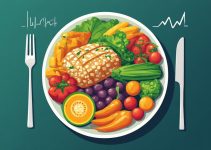
Macronutrients (macros) are the three types of nutrients that give you calories: protein, carbs, and fat. Each gram of protein delivers 4 calories, each gram of carbs delivers 4, and each gram of fat packs 9. Simple enough.
But here’s why just counting calories isn’t enough. Two people can eat 1,600 calories a day and get completely different results. One might be loading up on carbs with barely any protein. The other keeps a balanced ratio. The person eating enough protein will hold onto more muscle, feel less hungry, and almost certainly end up with better body composition. Same calories — dramatically different outcomes.
Step 1: Figure Out How Many Calories You Actually Burn
Before you set macros, you need your total daily energy expenditure (TDEE) — the total number of calories you burn in a day, including your resting metabolism and activity.
Quick Way to Estimate
- Desk job, not much exercise: Body weight in pounds x 12-13
- Moderately active (3-4 workouts per week): Body weight x 14-15
- Very active (5-6 workouts plus a physical job): Body weight x 16-17
So a 150-pound woman who works out 3 times a week would estimate her TDEE at roughly 2,100 to 2,250 calories per day.
Want something more precise? Use our BMR Calculator to find your basal metabolic rate, then multiply by your activity factor.
Setting Your Calorie Deficit
For fat loss that actually sticks, aim for a deficit of 300 to 500 calories per day. That works out to about 0.5 to 1 pound of fat loss per week — the rate that’s most associated with keeping your muscle intact.
Bigger deficits (500+ calories) sound tempting, but they accelerate muscle loss, spike your hunger hormones, and usually lead to rebound weight gain. Patience wins here. Every time.
Using our example: 2,175 (midpoint TDEE) minus 400 = a daily target of about 1,775 calories.
Step 2: Nail Your Protein (This Is the One That Matters Most)
Protein is the non-negotiable macro during fat loss. It protects your muscle mass, keeps you fuller longer, and has the highest thermic effect — meaning your body burns more calories just digesting it compared to carbs or fat.
What the research says for fat loss:
- General guideline: 0.7 to 1.0 grams per pound of body weight
- Women who strength train: 0.8 to 1.0 grams per pound
- If you’re significantly overweight: Use your goal body weight or lean body mass for this calculation instead of total weight
For a 150-pound woman: 150 x 0.8 = 120 grams of protein daily (that’s 480 calories from protein).
Step 3: Set Your Fat — Don’t Go Too Low
Dietary fat isn’t the enemy. Your body needs it for hormone production, vitamin absorption, and brain function. Cut it too aggressively and you’ll mess up your menstrual cycle, tank your mood, and — ironically — stall your fat loss.
The numbers:
- Floor: 0.3 grams per pound of body weight
- Sweet spot: 0.3 to 0.5 grams per pound
For a 150-pound woman: 150 x 0.35 = 53 grams of fat daily (477 calories from fat).
Never drop below 40 grams of fat per day regardless of your size. Hormonal disruption from ultra-low fat intake can actually stall fat loss entirely — the exact opposite of what you want.
Step 4: Carbs Get Whatever’s Left
After protein and fat are set, the remaining calories go to carbohydrates. Carbs are the most flexible macro — your body can function perfectly well across a wide range of intake.
Let’s do the math with our example:
- Total calories: 1,775
- Protein: 120g x 4 cal = 480 calories
- Fat: 53g x 9 cal = 477 calories
- What’s left for carbs: 1,775 – 480 – 477 = 818 calories
- Carbs: 818 / 4 = 205 grams per day
Final macros: 120g protein / 205g carbs / 53g fat = 1,775 calories
Don’t Want to Do All That Math? Try These Ratios
If the step-by-step calculation feels like too much, these simplified ratios work as a decent starting point:
- Moderate carb (most popular for a reason): 40% carbs / 30% protein / 30% fat
- Lower carb: 25% carbs / 40% protein / 35% fat
- Higher carb (better if you train hard): 50% carbs / 30% protein / 20% fat
The “best” ratio? It’s the one you can actually stick with. Seriously. There’s no single magic split. The ratio you follow consistently is the one that’ll produce results.
Making It Work in Real Life
Hitting your macros gets way easier with a little structure:
Put Protein in Every Single Meal
Spread your total evenly across 3 to 4 meals. Targeting 120 grams? That’s 30 to 40 grams per meal. Good sources:
- Chicken breast (31g per 4 oz)
- Greek yogurt (15-20g per cup)
- Eggs (6g each — so you need more than you think)
- Fish and shrimp (20-25g per 4 oz)
- Tofu (20g per cup)
- Lentils (18g per cup cooked)
Choose Real-Food Carbs
Vegetables, fruits, whole grains, potatoes, oats, and rice bring fiber and micronutrients along with their carbs. They’ll keep you way fuller than refined stuff like white bread or sugary snacks.
Don’t Fear Fat — But Measure It
Avocado, olive oil, nuts, seeds, and fatty fish are all excellent sources. But fat is calorie-dense, so measure your portions. One tablespoon of olive oil is 14 grams of fat and 120 calories. It adds up fast.
Mistakes That Trip People Up
- Eyeballing portions instead of weighing. This leads to consistent underestimation — every single time. A kitchen scale costs $10-15 and takes the guesswork out entirely.
- Chasing perfection every single day. Aim to hit your macros within 5-10 grams. Your weekly average matters way more than any individual day.
- Cutting too aggressively. If you’re constantly hungry, irritable, losing gym strength, or dropping more than 1% of body weight per week — your deficit is too big. Pull back.
- Forgetting about fiber. Aim for 25 to 30 grams daily from whole foods. Fiber supports gut health and makes a massive difference in how full you feel.
- Slashing protein on rest days. Your muscles recover and grow on rest days. They need protein whether you trained or not.
Calculate Your Starting Point
Use our BMR calculator to find your baseline calorie needs, then apply the macro formulas above to build your personalized plan.
You may also find our Body Fat Calculator and Ideal Body Weight Calculator helpful for setting realistic body composition goals.